Namaskar, My name is Lalit Mishra. Let’s discover the beautiful city of Orchha together. I have visited Orchha many times. My first visit was in 1999. At that time, there was only one hotel — Orchha Resort. I was working for a German company and could not find accommodation anywhere. I saw a signboard for a “Guest House” and went there, but the owner told me he was only planning to build one in the future. That was my first experience in Orchha. Today, Orchha has developed into a well-established tourist destination with many good hotels. Reaching Orchha has also become very easy. From Delhi, you can take the Shatabdi or Vande Bharat Express to Jhansi, and from there it is only about 12–18 km, which takes around 30 minutes by car. Orchha is a small town with a population of around 14,000 people. From Agra to Orchha, the distance is approximately 240–250 km, and the travel time is about 4.5 to 5.5 hours by road. From Delhi to Orchha, the distance is approximately 450–480 km, and the travel time is about 6.5 to 8 hours by road. Orchha is a complex of historical monuments. The highlights of this city are the Ram Raja Temple, Chaturbhuj Temple, and Orchha Palace. The city is located on the banks of the Betwa River and was built by the Bundela dynasty in the 16th century.
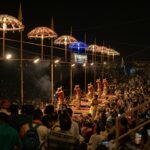
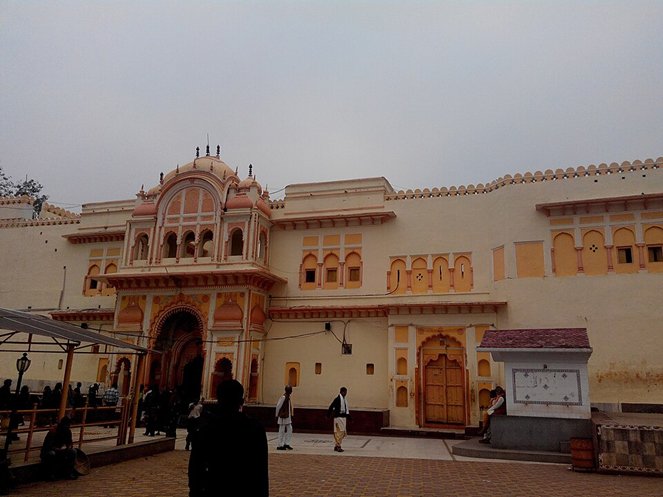
Orchha is considered one of the holy cities of Lord Rama. It is the only place where Lord Rama is worshipped as a king. In Orchha, no human is considered the king — only Lord Ram. During the evening Aarti, Lord Ram is given a Guard of Honour. Before entering the temple, you will even see security guards carrying weapons. Interestingly, this temple opens at 9:00 AM, whereas most temples in India open early in the morning at sunrise.
According to local belief, the queen (Rani) of Orchha went to Ayodhya after months of prayer and brought back the idol of Lord Ram with a promise that he would be worshipped as a king. It was also promised that once the idol was placed, it would never be moved. The idol was first installed in the queen’s palace (Rani Mahal), and it remains there to this day. Later, the king built the grand Chaturbhuj Temple, but the idol of Lord Ram was never shifted there. You should not miss the evening Aarti at this temple.
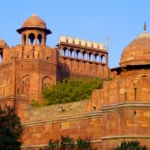
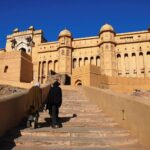
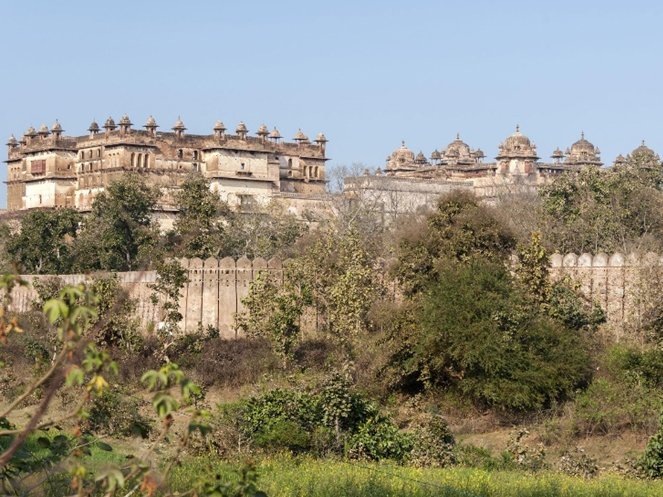
On the other side of the temple is the Orchha Palace complex, built in the 16th century over a period of nearly 90 years. It is located near the Betwa River and is surrounded by strong defensive walls. The main gate has iron spikes to protect against elephant attacks.This historical complex can be divided into two main parts: • Raja Mahal – built in pure Hindu architectural style • Jahangir Mahal – influenced by Indo-Islamic architecture The monument entry fee is approximately ₹50 for Indian visitors and ₹600 for foreign visitors. Government-approved guides are available near the ticket counter. We begin with the Raja Mahal. The first section is the Hall of Public Audience, famous for its stunning frescoes, many of which are over 500 years old. Some restoration work is ongoing. The king’s seat was placed in a corner because most daily matters were handled by ministers. Only important issues were brought to the king. As we move further inside, after ticket checking, you will see a large and impressive hall used for entertainment. On the right-hand side, there is a platform for dancers. This space was used to welcome important guests. The king’s throne was located on the balcony above. In the center is a corridor that served as a dining hall, with a ceiling beautifully decorated with paintings of royal processions, horses, and elephants. The shape of the hall resembles a boat.Inside, there are seven interconnected rooms, designed for security so that no one could easily identify which room the king was in. The outer rooms (like drawing rooms) feature frescoes of different incarnations of Lord Vishnu, while the bedrooms mainly depict scenes of Lord Krishna, in line with Hindu traditions. All rooms are decorated with beautiful frescoes made using natural vegetable colors, which is why they have survived for centuries. You can also go to the upper floors for a wonderful view of the Betwa River and the Ram Raja Temple. The second part of the complex is the Jahangir Mahal, built to welcome the Mughal emperor Jahangir, who stayed here for just one night. Later, it was used as a guest palace. It is one of the finest examples of Indo-Islamic architecture. The main gate faces east and is decorated with two large sandstone elephant sculptures. The palace has 36 rooms, and the basement contains more than 100 rooms. Visitors can walk on the upper floors to enjoy panoramic views of the city. This is truly one of the most beautiful palace complexes in Central India.